
Beyond cosmetics, BYOME LABS supports R&D and regulatory teams in the pharmaceutical industry.
With 20 years of expertise in microbiology, particularly in the pharmaceutical industry, we conduct studies within a strict and regulated framework for products that come into contact with the skin microbiome.
We also work on medical devices and various galenic formulations (wipes, gels, solutions, creams, etc.).
Our goal: to produce robust and reliable evidence to support your decisions.
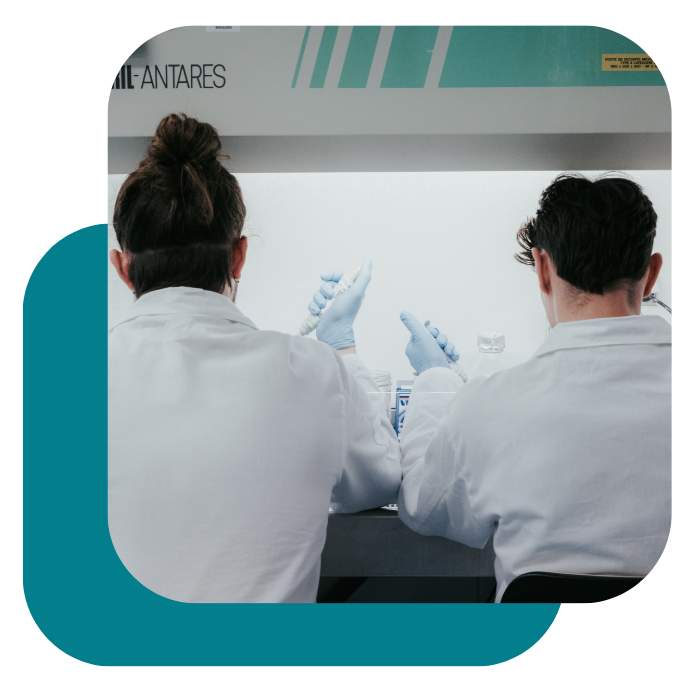
At BYOME LABS, we exclusively perform in vitro tests based on culturomics.
Marie, distributor of specialty ingredients
Sandra, DEMAIN BEAUTY
Coralie Sabatier, BOPLUME
Sébastien, cosmetics group
As research on the microbiome progresses, new therapeutic approaches are emerging. By modulating these microbial communities, it is becoming possible to consider innovative strategies for preventing and treating many diseases, whether acute or chronic. These advances underscore the importance of preserving this microbial balance to promote optimal health (Hou K et al. 2022, Choi I et al. 2012).
For laboratories and pharmaceutical manufacturers, understanding and positively influencing this balance is essential to optimize the action of topical treatments and limit adverse effects.
Switch to in vitro microbiome analysis
Are you developing an innovative dermatological treatment or a pharmaceutical active ingredient?
Contact BYOME LABS for a personalized and scientifically validated protocol.
Frequently asked questions


Would you like to make an appointment or get more information?
You can reach us by filling in the contact form opposite or by e-mail at : info@byomelabs.com
BYOME LABS
Cité de l’Innovation
7 rue Auguste Rodin
28630 LE COUDRAY
This site is protected by reCAPTCHA and the Google Privacy Policy and Terms of Service apply.
The human body is a complex ecosystem hosting billions of microorganisms. The term “microbiome” refers to the totality of the genes of these microbial communities, which extend across almost every surface of the body. It is often referred to as the “second genome” because of its complementary role to that of the host. Its interactions can be beneficial, pathogenic, or neutral, thereby influencing human physiology.
With genetic diversity estimated to be between 50 and 100 times greater than that of the host, the microbiome regulates many processes (1,2).
One of the major functions of the microbiome is to protect the body against colonization by pathogens. This regulation is based on complex interactions between microorganisms, which maintain a stable balance. However, under certain conditions, beneficial bacteria can become pathogenic due to changes in the microbial environment.
Sources :
1. Hou K, Wu ZX, Chen XY, Wang JQ, Zhang D, Xiao C, et al. Microbiota in health and diseases. Signal Transduct Target Ther. 23 avr 2022;7(1):1‑28.
2. Cho I, Blaser MJ. The human microbiome: at the interface of health and disease. Nat Rev Genet. avr 2012;13(4):260‑70.
3. Aggarwal N, Kitano S, Puah GRY, Kittelmann S, Hwang IY, Chang MW. Microbiome and Human Health: Current Understanding, Engineering, and Enabling Technologies. Chem Rev. 11 janv 2023;123(1):31‑72.
We work with:

Notre site utilise des cookies pour améliorer votre expérience de navigation. En continuant à utiliser notre site, vous acceptez notre utilisation de cookies conformément à notre politique de confidentialité.

