


Test your cosmetic products and ingredients on the microbiome
Our services by expertise
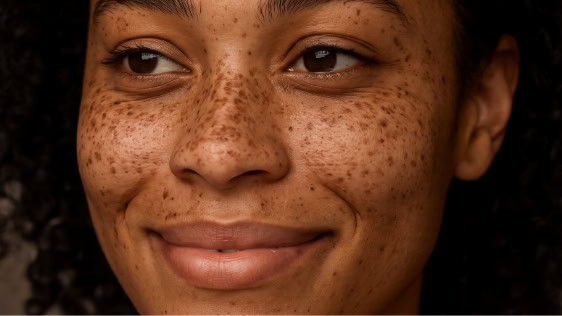
Skin microbiome
Understanding and optimising the microbiological balance of the skin
Assess the impact of your cosmetics on the skin microbiome
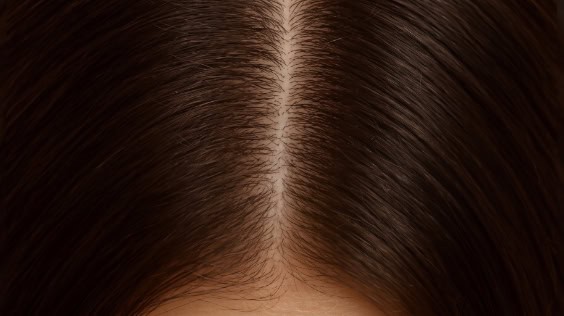
Hair microbiome
Study the impact of your hair care products on microbial balance
Understand the impact of your treatments on the scalp ecosystem for more effective and better tolerated products.
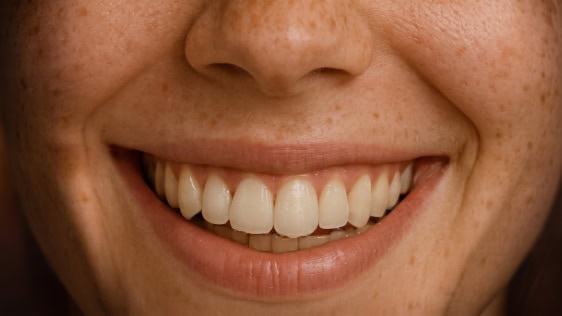
Oral microbiome
Measure the impact of your oral care products
Explore the bacterial balance of the oral cavity to develop innovative, safe and effective treatments.
Vaginal microbiome
Explore the impact of your intimate products on the microbiome
Understand and control the vaginal microbial balance for safe, effective and respectful care.
Our microbiome testing and analysis
Our strength: testing your products in biofilm mode, the natural organization of the microbiome.
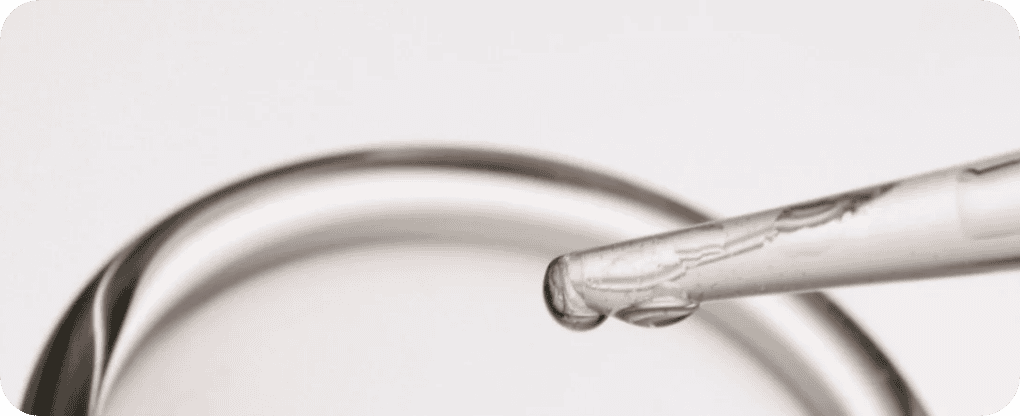
PLANKTONIC
Studying bacteria in their planktonic (free-floating) form provides a rapid and targeted initial assessment of the effect of an active ingredient or formulation. It allows us to measure direct antimicrobial activity, identify susceptible or resistant strains, and guide formulation development before moving to more complex models such as biofilms.
This approach should not be overlooked: it complements biofilm analysis to provide a comprehensive understanding of the product’s mode of action.
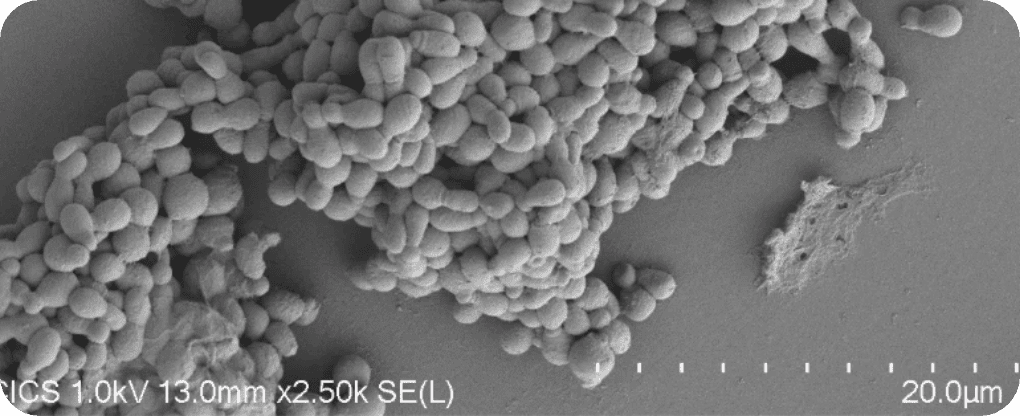
BIOFILM
Biofilms represent the natural, protective form in which the majority of microorganisms live in their environment. Working with biofilms makes it possible to assess the actual resistance of bacteria to treatments, evaluate the effect of a product on a structured microbial community, and anticipate its impact on microbiome balance. It is also essential for simulating chronic pathological conditions (acne, bacterial vaginosis, etc.) or preventing the formation of unwanted biofilms.
Presentation and sending of complete results including:
Raw data
Scientific report
Marketing report of interpretation and claims obtained
We master all microbiological tests and analyses, with a particular focus on the microbiome and biofilm:
Study conditions
- Single or multi-species cultivation
- Studies under aerobic, anaerobic and microaerophilic conditions
- Solid or liquid products of all textures (powder, cream, oil…)
- Differentiation between plankton and biofilm
- Creation of in vitro biofilms on all types of surfaces: hydroxyapatite, RHE
- Study of biofilm adhesion, proliferation and dispersion phenomena
- Biofilm observation
- Statistical analysis of results
- Reconstitution of actual product use conditions
Test and analysis methods
- MIC (Minimum Inhibitory Concentration)
- MBC (Minimum Bactericidal Concentration)
- Cristal Violet
- Count
- Measuring bacterial adhesion strength (Biofilm Ring Test®)
- Microscopy
- Antibiogram / Antibiofilmogram
Tailored support at every stage of your project


Why perform a microbiome analysis?
Scientific evidence to strengthen your marketing argument
Understanding the impact of your cosmetic products on the microbiome is essential to ensure their safety, stability, and efficacy. At Byome Labs, we conduct in-depth analyses of the microbial communities present on the skin, scalp, oral cavity, and intimate area.
Thanks to our scientific expertise, we provide you with precise data on the microbiome balance before and after application of your products, allowing you to optimize your formulations and support your marketing claims with tangible evidence.
- Scientific validation: Demonstrate the positive impact of your formulas.
- Competitive differentiation: Position your products as innovative and microbiome-friendly.
- Formula optimization: Adjust your compositions based on the results.
- Consumer Trust: Reassure your customers with tangible evidence.
How does microbiome analysis work?
Our analysis relies on advanced scientific methodology to ensure accurate and actionable results.
Here are the key steps:
- Identification and selection of strains adapted to your objectives
- Culture in the appropriate form: planktonic or biofilm
- Accurate measurement of your product’s impact on the microbiome
- Detailed report: Delivery of an actionable study for your marketing and R&D.
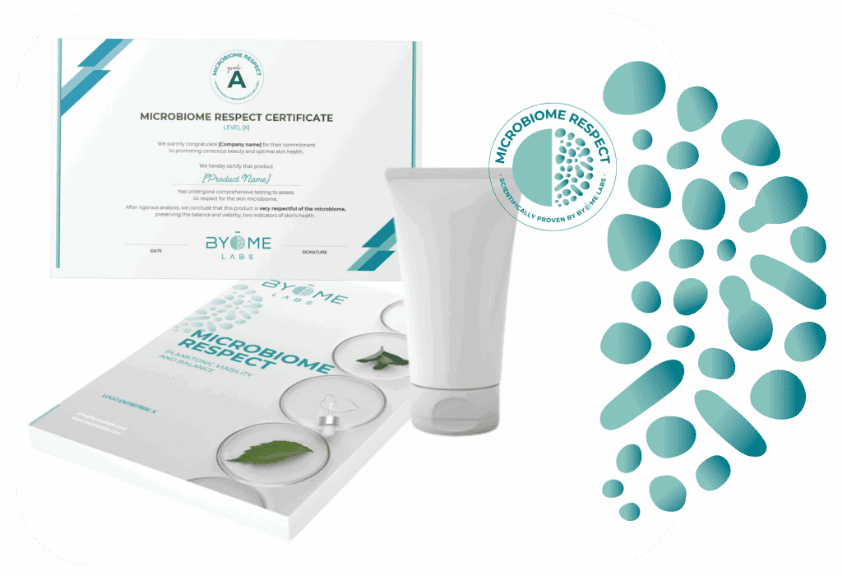
Label Microbiome Respect
- Test it. Measure. Prove. The impact of your products on the skin microbiome.
Obtain scientific evidence of the efficacy and safety of your cosmetics.
Analyse du microbiome : Techniques et méthodes pour décrypter l’invisible
L’analyse du microbiome humain révèle la complexité des communautés microbiennes qui colonisent notre corps. De nombreuses approches sont utilisées pour l’étude et l’analyse de ce microbiome, allant des techniques de culture aux méthodes de séquençage complexes. Il existe en effet de nombreuses méthodes pour étudier le microbiome, chacune présentant des avantages et des inconvénients, mais apportant des informations complémentaires pour obtenir une vision complète de la communauté microbienne étudiée (1).
-
Qu'est-ce que l'analyse du microbiome ?
L’analyse du microbiome englobe l’ensemble des techniques permettant d’identifier, caractériser et quantifier les micro-organismes présents dans un échantillon microbiologique. Cette discipline combine microbiologie classique, biologie moléculaire, biochimie et bioinformatique pour décrypter la composition et les fonctions des communautés microbiennes (1).
Deux approches principales dominent l’analyse du microbiome : le séquençage génétique qui offre une vision exhaustive de la diversité microbienne, et la culturomique qui permet d’isoler et d’étudier les micro-organismes vivants.
-
Evolution historique des techniques d'analyse
L’ère de la culture classique
Avant l’avènement du séquençage, l’analyse du microbiome reposait exclusivement sur la culture des micro-organismes en laboratoire. Cette approche a permis d’identifier les principales bactéries colonisant la peau : Staphylococcus, Cutibacterium (anciennement Propionibacterium), Corynebacterium, ainsi que des levures comme Malassezia (1,2).
L’exploration du microbiome a ensuite considérablement évolué avec l’essor des technologies de séquençage génétique. Ces avancées ont enrichi notre compréhension de la diversité microbienne et ont permis de caractériser les interactions complexes entre micro-organismes et leur environnement (1,3).
-
Culturomique : la renaissance de la culture microbienne
Principe et innovation
Les cultures classiques de bactéries sur boîte de Petri en conditions standards ne sont pas adaptées au développement de nombreuses bactéries, qui nécessitent alors des conditions très précises pour pouvoir se développer.
Face aux limites des cultures traditionnelles, la culturomique a émergé comme une approche pragmatique pour l’analyse du microbiome.
La culturomique multiplie les conditions de culture et utilise des milieux de croissance spécifiques pour favoriser le développement de bactéries exigeantes. L’identification rapide par spectrométrie de masse MALDI-TOF accélère le processus d’analyse.
Diversification des conditions expérimentales
L’analyse du microbiome par culturomique exploite une variété de paramètres :
- Conditions d’oxygénation (aérobie, anaérobie, microaérophile)
- Températures variables
- Nutriments spécifiques adaptés aux besoins métaboliques
- pH et salinité ajustés
- Durées d’incubation plus longues
- Cette diversification permet d’isoler des bactéries auparavant considérées comme non cultivables, enrichissant considérablement notre compréhension du microbiome.
La culturomique favorise la croissance de bactéries exigeantes et fournit une meilleure représentation de la diversité microbienne.(3–5)
-
Avancées et perspectives de la culturomique
Expansion du répertoire microbien
Depuis son essor, la culturomique a nettement enrichi la connaissance du microbiome en rendant cultivables de nombreuses espèces auparavant difficiles à étudier. Cette expansion offre de nouvelles perspectives pour l’étude du microbiome et son implication dans diverses pathologies.L’analyse du microbiome devient plus précise et fonctionnelle.
Étude des interactions microbiennes
La culturomique permet de caractériser les micro-organismes en conditions réelles et d’évaluer :
- Leur comportement individuel et collectif
- Les interactions inter-espèces
- Leur rôle dans les déséquilibres microbiens
- Leur réponse aux traitements et produits cosmétiques
La culture bactérienne reste aujourd’hui indispensable pour approfondir notre connaissance du microbiome cutané. Contrairement aux techniques génomiques qui fournissent une « photographie » des micro-organismes présents, sans distinction entre cellules vivantes et mortes, la culture permet d’isoler des bactéries viables et de les étudier individuellement. Elle offre ainsi des opportunités uniques pour analyser leurs caractéristiques biologiques, leur métabolisme et leur réponse aux traitements/produits.
-
Quelle est l'expertise BYOME LABS en analyse du microbiome ?
Chez BYOME LABS, nous analysons l’impact de vos produits sur les bactéries représentatives du microbiome grâce à la culturomique. Notre approche va jusqu’à l’étude de leur mode de vie en biofilm, reflétant leur état naturel principal sur la peau et les muqueuses.
Notre analyse du microbiome s’appuie sur plus de 20 ans d’expertise cumulée en microbiologie. Les bactéries sélectionnées pour chaque modèle (dysbiose acnéique, dermatite atopique, peau mature, microbiome vaginal, buccal) sont choisies selon les données scientifiques les plus récentes et validées par séquençage génétique.
Cette approche permet d’évaluer l’effet des produits dans des conditions proches de la réalité physiologique et d’obtenir une vision précise du comportement bactérien face à vos formulations.
-
L'avenir de l'analyse du microbiome
L’analyse du microbiome continue d’évoluer avec l’émergence de nouvelles technologies. L’intelligence artificielle, la métabolomique et la transcriptomique ouvrent de nouvelles perspectives pour comprendre ces écosystèmes complexes.
Chez BYOME LABS, nous ne plaçons pas une technique au-dessus d’une autre. Nous combinons les forces de chaque approche pour fournir une analyse du microbiome rigoureuse et adaptée aux besoins spécifiques de nos partenaires.
Prêt à analyser l’impact de vos produits sur le microbiome ? Contactez nos experts pour une évaluation personnalisée basée sur la culturomique, et obtenez des résultats exploitables pour vos développements.
Sources
1. Chen Y, Knight R, Gallo RL. Evolving approaches to profiling the microbiome in skin disease. Front Immunol. 4 avr 2023;14:1151527.
2. Lagier JC, Armougom F, Million M, Hugon P, Pagnier I, Robert C, et al. Microbial culturomics: paradigm shift in the human gut microbiome study. Clin Microbiol Infect. 1 déc 2012;18(12):1185‑93.
3. Lagier JC, Hugon P, Khelaifia S, Fournier PE, La Scola B, Raoult D. The Rebirth of Culture in Microbiology through the Example of Culturomics To Study Human Gut Microbiota. Clin Microbiol Rev. janv 2015;28(1):237‑64.
4. Bilen M. Strategies and advancements in human microbiome description and the importance of culturomics. Microb Pathog. 1 déc 2020;149:104460.
5. Lagier JC, Dubourg G, Million M, Cadoret F, Bilen M, Fenollar F, et al. Culturing the human microbiota and culturomics. Nat Rev Microbiol. sept 2018;16(9):540‑50.