
Understand and control the vaginal microbial balance for safe, effective and respectful care.
The vaginal microbiome is a complex ecosystem dominated mainly by Lactobacillus species, which play a key role in protecting against infections and maintaining a healthy vaginal environment.
A disturbance in the balance of the vaginal microbiome can lead to dysbiosis, frequently observed in the form of bacterial vaginosis, where Lactobacillus are replaced by opportunistic bacteria organised into resistant biofilms.
For brands developing hygiene products, care products or devices for vaginal use, analysing this ecosystem is essential.
At BYOME LABS, we help manufacturers assess the impact of their formulas on the vaginal microbial composition to validate their safety and promote their benefits.

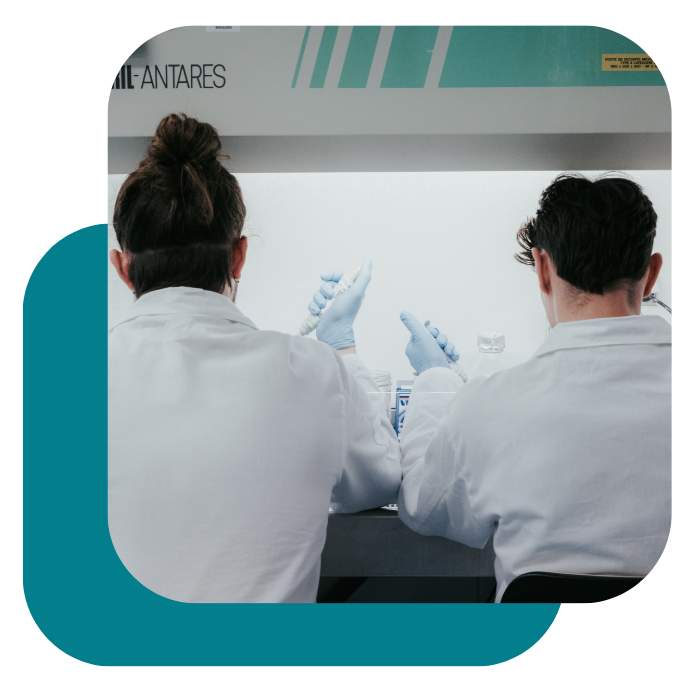
“I am developing a vaginal product and would like to evaluate its activity against several Candida species involved in vaginal dysbiosis.”
We carry out a series of in vitro evaluations on four Candida species. Using our strain library, which includes multiple Candida strains, we select those directly involved in the targeted condition.
The tests include:
A preventive test assessing inhibition of biofilm formation
A curative test measuring efficacy on already established biofilms, using a 4-day application protocol, morning and evening
The product demonstrates full efficacy against mature Candida biofilms, as well as strong inhibition of their adhesion.
We provide you with all the scientific evidence along with the marketing assets needed to support your sales strategies.
Marie, distributor of specialty ingredients
Sandra, DEMAIN BEAUTY
Coralie Sabatier, BOPLUME
Sébastien, cosmetics group
Trust BYOME LABS to test their impact on the vaginal microbiome.
Your questions about the vaginal microbiome


Would you like to make an appointment or get more information?
You can reach us by filling in the contact form opposite or by e-mail at : info@byomelabs.com
BYOME LABS
Cité de l’Innovation
7 rue Auguste Rodin
28630 LE COUDRAY
This site is protected by reCAPTCHA and the Google Privacy Policy and Terms of Service apply.
The vaginal microbiome is a unique and dynamic ecosystem, dominated by lactobacilli. This complex microbial community plays a major protective role against infections and directly influences women’s genital and reproductive health.
The vaginal microbiome refers to the collection of microorganisms colonizing the vagina. Dominated by bacteria of the genus Lactobacillus, this ecosystem forms a natural barrier against pathogens and maintains a protective acidic environment (1,2).
Lactobacilli—particularly Lactobacillus crispatus, Lactobacillus gasseri, Lactobacillus iners, and Lactobacillus jensenii—make up 70 to 90% of the vaginal flora in healthy women. These bacteria produce lactic acid, maintaining an acidic vaginal pH that inhibits the growth of pathogenic microorganisms.
However, the composition can vary due to internal and external factors, including hormonal fluctuations, sexual activity, and pregnancy. The use of genetic sequencing techniques has improved our understanding of the diversity and dynamics of this microbiome (1,2).
Hormonal variations and menstrual cycle
Estrogens play a key role in maintaining the balance of the vaginal microbiome. These hormones promote the growth of lactobacilli by stimulating glycogen production in vaginal epithelial cells. Hormonal fluctuations during the menstrual cycle thus alter the microbial composition.
Sexual activity and intimate hygiene
Sexual activity can temporarily disrupt the vaginal microbiome. Semen, being alkaline, temporarily neutralizes vaginal acidity, creating favorable conditions for opportunistic bacteria. Inappropriate intimate hygiene products can also destabilize this fragile ecosystem.
Age and menopause
Menopause, with decreased estrogen levels, leads to significant changes in the vaginal microbiome. The reduction of lactobacilli and the increase in vaginal pH make postmenopausal women more susceptible to infections and vaginal discomfort.
Physiological changes
During pregnancy, the vaginal microbiome undergoes remarkable changes. The dominance of lactobacilli, particularly Lactobacillus crispatus and Lactobacillus iners, increases, creating an even more protective environment (2).
This stabilization of the vaginal microbiome during pregnancy serves as an essential protective mechanism. It reduces the risk of ascending infections that could compromise the pregnancy and protects the fetus against opportunistic pathogens.
Bacterial vaginosis
Bacterial vaginosis (BV) is one of the most common vaginal dysbioses in women of reproductive age. BV is characterized by an imbalance in which Lactobacillus species are replaced by anaerobic bacteria such as Gardnerella vaginalis, Atopobium vaginae, Ureaplasma urealyticum, and Mycoplasma hominis. This leads to increased bacterial diversity, often associated with clinical symptoms, although some women may remain asymptomatic.
Formation of pathogenic biofilms
BV is accompanied by the formation of bacterial biofilms, notably by Gardnerella vaginalis and Atopobium vaginae. These three-dimensional structures protect pathogenic bacteria, making antibiotic treatments less effective and promoting frequent recurrences (1).
Symptoms and complications
As a polymicrobial condition, BV can cause vaginal symptoms such as:
Abnormal vaginal discharge
Characteristic unpleasant odor
Itching and irritation
Increased risk of sexually transmitted infections
Obstetric complications
Paradoxically, some women with dysbiosis remain asymptomatic, complicating diagnosis and management, with a high relapse rate. Treatment failure may be due to the presence of hard-to-culture or antibiotic-resistant bacteria.
BV is associated with an increased risk of sexually transmitted infections (HIV, herpes, chlamydia) and obstetric complications such as preterm birth and membrane rupture (1).
Vaginal candidiasis
Candidiasis is another well-studied vaginal dysbiosis, characterized by the presence of fungal strains, primarily Candida albicans. It develops in moist environments, as mucosal surfaces provide an ideal habitat, and thrives under acidic pH conditions unlike bacterial vaginosis, which is associated with higher vaginal pH.
Beyond conventional antibiotics
In addition to standard antibiotic and antifungal treatments, several emerging approaches aim to improve the management of vaginal dysbiosis (1).
Probiotic approach
Probiotics, particularly Lactobacillus reuteri and Lactobacillus rhamnosus, represent a promising strategy. Administered orally or vaginally, they can:
Restore lactobacilli dominance
Inhibit the growth of pathogens
Prevent recurrences of bacterial vaginosis
Biofilm-targeted therapies
DNases, enzymes capable of degrading extracellular DNA in biofilms, offer an innovative approach to disrupt the protective structures of pathogens and enhance the effectiveness of antimicrobial treatments.
Vaginal microbiota transfer
Vaginal microbiota transfer (VMT), inspired by fecal microbiota transplantation, is emerging as a revolutionary approach. This technique aims to restore a healthy vaginal microbiome by transplanting flora from a healthy donor.
The vaginal microbiome plays a key role in women’s genital health. A deeper understanding of the dynamics of its microorganisms and the effects of dysbiosis could improve the treatment of conditions such as bacterial vaginosis. The influence of pregnancy on microbiome composition further highlights the importance of research in this area, particularly for preventing obstetric complications.
At BYOME LABS, we offer innovative in vitro tests to measure the impact of products that come into contact with the vaginal microbiome. With 20 years of expertise, we can precisely assess how your formulations interact with this delicate ecosystem, studying the effects of both cosmetic and pharmaceutical products.
We test your intimate care products on representative panels that include commensal lactobacilli as well as pathogenic species. Our unique culturomics approach evaluates the impact on biofilms, particularly those formed by Gardnerella vaginalis, which are critical in infection recurrence.
Our exclusive protocols determine whether your product respects the vaginal microbiome, preserves commensal strains, and regulates pathogenic species, using models of balanced microbiomes as well as dysbioses, while controlling environmental factors such as pH. If adjustments are needed, BYOME LABS supports you in developing intimate care solutions that maintain microbial balance and prevent dysbiosis.
Leading intimate care brands trust us to validate their “microbiome-friendly” claims and develop formulations that respect the vaginal microbiome.
A deeper understanding of the vaginal microbiome is transforming the development of intimate hygiene products. Consumers now demand formulations that preserve and support this fragile balance rather than disrupt it.
Future innovations will integrate sophisticated combinations of prebiotics, probiotics, and targeted actives to maintain vaginal microbiome homeostasis. This personalized approach represents the future of female intimate health.
Ready to validate the safety and microbiome-friendliness of your intimate care products? Contact our experts for a customized assessment and position your formulations as truly respectful of the vaginal microbiome.

Notre site utilise des cookies pour améliorer votre expérience de navigation. En continuant à utiliser notre site, vous acceptez notre utilisation de cookies conformément à notre politique de confidentialité.

