
Assess the impact of your products on the skin microbiome
The skin microbiome plays a key role in skin health: it contributes to its protection, hydration, immune regulation and
to the overall balance of the skin barrier. Its composition varies considerably depending on the area of the body; for example, the microbiome of the
The hair on your armpits is very different from the hair on your face or forearms.
The skin microbiome relies on a delicate balance between different microbial species. When this balance is disrupted, a
An imbalance called dysbiosis can develop, often correlated with the development of skin conditions such as acne or dermatitis.
atopic.
At BYOME, we support cosmetics, pharmaceutical, medical device and even veterinary brands in
assessing the microbiotic impact of their products or ingredients, whether they are finished products, active ingredients, or devices intended for
(de)contaminating.
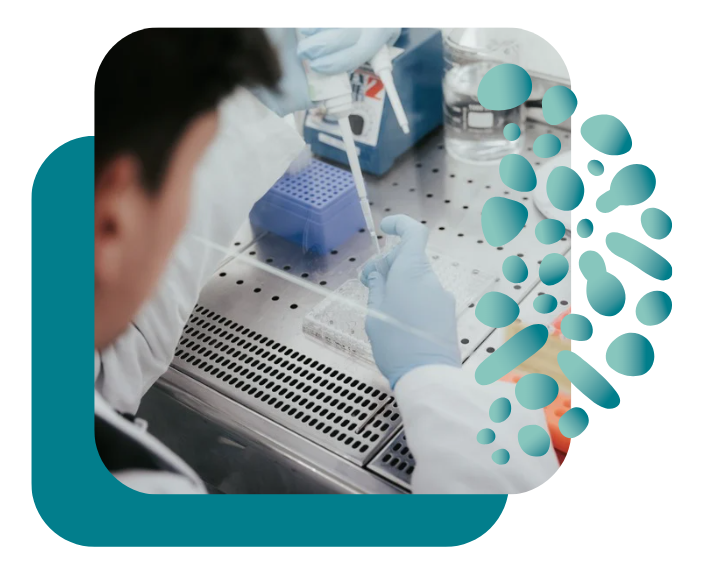
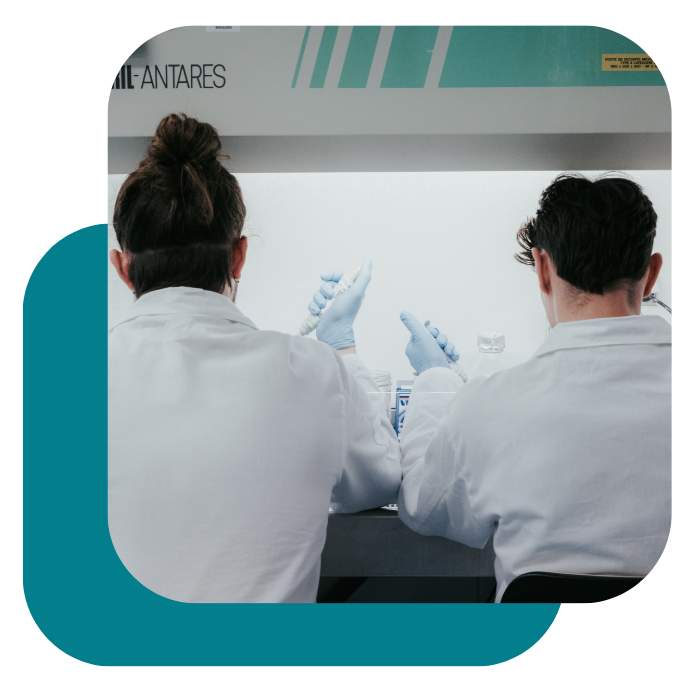
“I am developing an anti-acne product and would like to obtain scientific evidence of its activity against C. acnes, a bacterium involved in the development of acne.”
We select the C. acnes phylotypes of interest in cases of acne-related dysbiosis using our strain library, which includes strains isolated from acne-prone individuals. Taking into account the intended use of your product, we then measure its activity in preventing biofilm formation.
The product is highly effective against C. acnes: it inhibits biofilm formation by the strains, thereby limiting colonization by the pro-inflammatory strain.
We provide you with all the scientific evidence as well as all the marketing assets you need to support your sales strategies.
Marie, distributor of specialty ingredients
Sandra, DEMAIN BEAUTY
Coralie Sabatier, BOPLUME
Sébastien, cosmetics group
Demonstrate scientifically the effect of your formulas on the skin’s microbial balance.
Your questions about the skin microbiome


Would you like to make an appointment or get more information?
You can reach us by filling in the contact form opposite or by e-mail at : info@byomelabs.com
BYOME LABS
Cité de l’Innovation
7 rue Auguste Rodin
28630 LE COUDRAY
This site is protected by reCAPTCHA and the Google Privacy Policy and Terms of Service apply.
Human skin harbors a complex ecosystem of microorganisms: the skin microbiome. This invisible community, composed of billions of bacteria, fungi, and viruses, represents your first line of defense against external aggressions and plays a crucial role in your skin’s health and protection against pathogens (1,2).
The skin microbiome refers to all the microorganisms living on our skin. Current research shows that each square centimeter of skin harbors up to 1 million bacteria, depending on the area of the body. This microbial diversity forms a unique ecosystem that varies according to body area and individual.
Since antiquity, human skin has been recognized as an essential barrier protecting the body against external aggressions, but it was only in the 19th century that the microorganisms present on its surface were studied. Early work in skin microbiology focused on pathogens responsible for infections. With the development of culture techniques in the 20th century, researchers began to discover the microbial diversity of the skin. More recently, thanks to genetic sequencing, a more complete picture of this microbiome has emerged. (1) The pioneering work of Grice and Segre (2009)(2) demonstrated that the skin surface harbors a complex and dynamic community of microorganisms, highlighting its crucial role in maintaining skin and systemic health.
The distribution of these microorganisms differs according to three types of skin areas (23):
The balance of the skin microbiome depends on multiple factors. Age gradually alters its composition: newborns exhibit a strong dominance of Staphylococcus, while adolescents see an increase in Cutibacterium acnes alongside sebum production. Sex also influences this composition, with men generally having greater microbial diversity than women.
Daily habits directly impact your skin microbiome. Regular use of cosmetics can alter up to several tens of percent of the microbial composition in just 4 weeks (Bouslimani et al., 2019) and skin surface conditions. Diet, hygiene habits, environmental exposure, and even your postal code influence the diversity and balance of the microbiome, demonstrating the impact of individual choices on skin health (5,6,9).
The symbiotic relationship between the skin and its microorganisms is influenced by cosmetic products, whose impact can be either beneficial or detrimental, depending on the ingredients, their concentration and the formulation.
Recent research has shown that the application of skincare products can induce alterations in the skin microbiome, potentially affecting its balance—a condition known as dysbiosis (6,9,10). This phenomenon of microbial disruption is increasingly recognized as a contributing factor to numerous skin conditions, including acne, atopic dermatitis, psoriasis, and, in some cases, more serious forms such as skin cancer. Cosmetic ingredients, while designed to improve the appearance and health of the skin, can impact or even alter the skin’s microbial composition in complex ways, promoting some microbial species while inhibiting others, which can lead to imbalances. Given these challenges, it is essential to better understand the impact of cosmetics on the skin microbiome in order to develop formulations that respect the skin’s natural microbial balance.
Cosmetic products can influence the skin microbiome in various ways. For example, preservatives, often used to prevent microbial contamination of formulations, impact bacterial population dynamics (10,11). Some preservatives can inhibit the growth of pathogenic microorganisms such as Staphylococcus aureus, but can also negatively affect beneficial bacteria like Staphylococcus epidermidis, which are essential for skin homeostasis (10,12).
Similarly, ingredients such as oils, peptides, and carbohydrates can serve as nutrient substrates, promoting the proliferation of opportunistic microorganisms, while product-induced variations in skin pH can also disrupt the microbiome balance (11). However, it is important to note that this effect is highly concentration-dependent (11). Microorganisms that metabolize complex lipids into fatty acids, such as Cutibacterium or Malassezia, are boosted by the oils present in moisturizing emulsions. Alkaline formulations, on the other hand, can promote species such as Candida albicans, known for their pathogenic potential (9,10).
The effects of cosmetic products on the skin microbiome are not limited to minor alterations. Recent studies have shown that profound disruptions to the microbiome, such as those induced by skincare products containing harsh chemicals, can have long-term consequences for skin health, including the onset of chronic diseases.(14) Prolonged disruptions to the skin microbiome can lead to chronic inflammation, increased oxidative stress, and, in some cases, promote the development of skin cancers.(15)
As a result, it has become imperative to better understand how cosmetic products interact with the skin microbiome. As the cosmetics industry continues to evolve, it is essential to pursue research on the effects of these products to ensure skincare products that respect and promote the microbial diversity essential for healthy skin.
These challenges of preserving the skin microbiome also extend to the pharmaceutical sector, where dermatological treatments must now take into account their impact on the microbial balance, as well as to the veterinary field, where the skin health of domestic animals requires a similar approach that respects the microbiome.
At BYOME LABS, we leverage our 20 years of expertise and our team of 17 microbiology specialists to serve cosmetic brands. Our laboratory has analyzed over 5,000 skin microbiome sequences and developed unique in vitro evaluation protocols based on culturomics approaches. These protocols allow us to assess the impact of cosmetic, dermo-cosmetic, and pharmaceutical products on microorganisms representative of the skin microbiome.
We have particular expertise in the study of biofilms, a natural form of bacterial organization on the skin, often overlooked in conventional testing. This approach enables us to accurately evaluate the real-world impact of your formulations on the skin microbiome under conditions closely resembling physiological reality.
To design the best study models, we rely on the latest available scientific data, particularly from genomic sequencing studies and the latest publications on the subject. This expertise allows us to offer our clients robust and directly applicable assessment solutions for developing skincare products that respect the skin microbiome.
Leading brands trust us to validate their “microbiome-friendly” claims and develop formulations that respect this delicate ecosystem. Our detailed reports enable you to communicate scientifically about the safety of your products with regard to the skin microbiome.
Preserving the skin microbiome is becoming a major challenge for the cosmetics industry. Consumers are seeking products that respect their skin flora, creating a rapidly growing market.
The future of cosmetics lies in a deep understanding of product-microbiome interactions. Tomorrow’s formulations will incorporate prebiotics, postbiotics, and active ingredients specifically selected to maintain skin microbiome homeostasis.
Ready to validate the impact of your formulations on the skin microbiome? Contact our experts for a personalized assessment and position your products as truly microbiome-friendly.

Notre site utilise des cookies pour améliorer votre expérience de navigation. En continuant à utiliser notre site, vous acceptez notre utilisation de cookies conformément à notre politique de confidentialité.

