
Understand the impact of your treatments on the scalp's microbial ecosystem for more effective and better tolerated products.
The scalp is home to a specific microbial flora that plays a central role in skin and hair balance. Imbalances, dandruff, seborrheic dermatitis, itching, excess sebum… many disorders are linked to a disruption of this ecosystem. BYOME LABS offers targeted analyses to study the impact of your shampoos, serums, or lotions on the scalp microbiome.

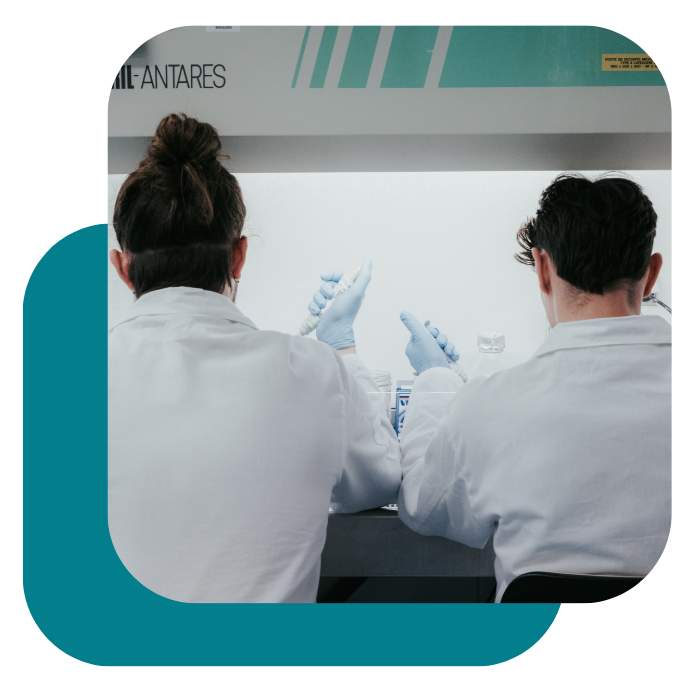
A scientific approach to cosmetic innovation
Marie, distributor of specialty ingredients
Sandra, DEMAIN BEAUTY
Coralie Sabatier, BOPLUME
Sébastien, cosmetics group
Prove their safety and their respect for the scalp microbiome.
Your questions about the hair microbiome


Would you like to make an appointment or get more information?
You can reach us by filling in the contact form opposite or by e-mail at : info@byomelabs.com
BYOME LABS
Cité de l’Innovation
7 rue Auguste Rodin
28630 LE COUDRAY
This site is protected by reCAPTCHA and the Google Privacy Policy and Terms of Service apply.
Your scalp hosts billions of microorganisms that make up the scalp microbiome. This complex ecosystem, based on a delicate balance between bacteria, fungi, and other microorganisms, plays a key role in hair health and helps protect against dandruff, itching, and other scalp disorders.
The scalp microbiome represents the collection of microorganisms living on the surface of your scalp. This unique microbial community interacts with sebum production, maintains pH balance, and forms a protective barrier against pathogens such as dandruff and seborrheic dermatitis (1–3).
Three major groups of microorganisms dominate the scalp microbiome (1):
Cutibacterium acnes (formerly Propionibacterium acnes): These anaerobic bacteria, particularly Cutibacterium acnes, play a role in sebum metabolism and skin balance. They produce free fatty acids that help maintain the natural acidity of the scalp.
Staphylococcus: Staphylococcus epidermidis is beneficial and helps protect against pathogens, whereas Staphylococcus aureus, found in higher proportions in certain scalp conditions, can become problematic if the balance is disrupted.
Malassezia: These lipophilic fungi dominate the scalp’s fungal flora. They break down triglycerides in sebum into fatty acids, which is beneficial for skin health but can cause inflammation and scalp irritation if overrepresented.
This composition varies depending on scalp regions, age, and individual characteristics, creating a unique ecosystem for each person.
The scalp microbiome plays several key roles in hair health:
Antimicrobial protection: Beneficial microorganisms produce antimicrobial peptides that limit the growth of pathogens (3). This natural defense helps prevent infections and maintains the balance of the ecosystem.
Sebum regulation: Cutibacterium acnes metabolizes lipids and directly influences sebum production. This regulation helps maintain optimal scalp hydration (4).
Maintenance of the skin barrier: The balance between bacterial and fungal populations preserves the integrity of the skin barrier, reducing inflammation and irritation (2).
Many everyday factors can disrupt the scalp microbiome:
Hair care routines: Inappropriate routines directly affect microbial balance. Excessive washing removes protective microorganisms, while insufficient hygiene promotes the growth of sebum-metabolizing microbes, leading to irritation and dandruff (5).
Cosmetic products: Shampoos containing harsh surfactants can alter the scalp microbiome and encourage colonization by pathogenic yeasts (3,6).
Lifestyle factors: Chronic stress changes microbial composition, while an unbalanced diet can promote inflammatory conditions (4).
Environmental factors: Pollution and humidity can modify the microbial diversity of the scalp, creating conditions prone to imbalance (1,3).
Scalp Dysbioses
When the balance of the scalp microbiome is disrupted, several conditions can arise:
Dandruff: Excessive proliferation of Malassezia, combined with overproduction of sebum, accelerates scalp flaking. Studies have shown that Malassezia restricta and Malassezia globosa are the species most associated with dandruff (1).
Seborrheic dermatitis: Characterized by inflammation and greasy scales, this condition is linked to interactions between Malassezia, the immune system, and lipid production. Metagenomic analyses have revealed imbalances in the relative proportions of Cutibacterium acnes and Malassezia in patients with seborrheic dermatitis (1).
Alopecia: Some studies suggest that scalp microbiome imbalances may promote inflammatory conditions leading to hair loss. Additionally, a reduction in Cutibacterium acnes has been observed in certain types of alopecia (4).
Restoring a healthy scalp microbiome requires a comprehensive approach:
Use gentle, scalp-appropriate shampoos (6).
Probiotics and prebiotics: Some formulations include prebiotics to nourish commensal microorganisms or probiotics to help recolonize a disrupted microbiome (3).
Diet and lifestyle: A diet rich in antioxidants, essential fatty acids, and vitamins can support a healthy microbiome (4).
Spacing out washes to preserve the natural microbial balance.
At BYOME LABS, we assess the impact of hair care products on the scalp microbiome using innovative in vitro tests based on culturomics. With over 20 years of combined expertise, we can precisely analyze microbial diversity and balance after the application of your formulations, using models that mimic the scalp environment (pH, sebum addition, temperature, etc.). We study the effects of your cosmetic or pharmaceutical products on the scalp microbiome.
We test your products on representative panels including Cutibacterium acnes and various Malassezia species, which are particularly challenging to culture. Our unique approach evaluates their impact on biofilms, the natural form of microbial organization on the scalp.
Our customized protocols allow us to identify formulations that preserve the balance of commensal microorganisms while regulating pathogenic populations. Leading hair care brands trust us to validate their “microbiome-friendly” claims and to develop treatments that respect the scalp microbiome.
Understanding the scalp microbiome is transforming hair care product development. Consumers now expect formulations that respect and protect this delicate ecosystem.
Future innovations will incorporate sophisticated combinations of prebiotics, postbiotics, and targeted actives to maintain the homeostasis of the scalp microbiome. This personalized approach represents the future of effective and sustainable hair care.
Validate the impact of your hair care formulations on the microbiome! Contact our experts for a customized assessment and differentiate your products in the microbiome-friendly hair care market.

Notre site utilise des cookies pour améliorer votre expérience de navigation. En continuant à utiliser notre site, vous acceptez notre utilisation de cookies conformément à notre politique de confidentialité.

