Acne vulgaris is a common dermatological condition that primarily affects adolescents and young adults (1,2). Its impact is not limited to appearance. It can impair quality of life and have significant psychological repercussions (3,1). Historically, the pathogenesis of acne has been linked to several key factors, including excessive sebum production, follicular hyperkeratinization, and increased bacterial colonization. However, recent research has highlighted the importance of the skin microbiome and its balance in the development and severity of this condition (3,1).
• Cutibacterium acnes: a key player, with nuance
Cutibacterium acnes (C. acnes), a Gram-positive anaerobic bacterium, is naturally present on the skin, particularly in lipid-rich sebaceous glands (1). Certain strains of Cutibacterium acnes, through their pro-inflammatory properties and their ability to form biofilms, are now considered opportunistic agents in inflammatory acne (2).
Indeed, comparison between healthy skin and acne-prone skin highlights the central role of Cutibacterium acnes in the pathogenesis of acne.

On healthy skin, C. acnes is present as a commensal organism, in balance with other microorganisms (bacteria, fungi, viruses), without triggering inflammation. Immune homeostasis and barrier function are maintained. In acne-prone skin, by contrast, certain virulent strains of C. acnes proliferate excessively. They form protective biofilms (A), induce abnormal proliferation and differentiation of keratinocytes accompanied by epidermal inflammation (B), stimulate sebocyte lipogenesis (C), and disrupt the cutaneous immune response (D). This cascade of events leads to chronic inflammation and the formation of characteristic acne lesions (3).
Staphylococcus and its role in microbial balance
Among other bacteria influencing acne, certain Staphylococcus species play a modulatory role. Staphylococcus epidermidis, for example, is a common skin bacterium that can limit the proliferation of C. acnes by producing natural antimicrobial substances (1,3).
Malassezia: a fungus involved in certain forms of acne
While bacteria are often spotlighted in acne pathogenesis, the role of certain fungi, notably Malassezia spp., also deserves consideration. This lipophilic microorganism is naturally present on the skin and can be involved in conditions such as seborrheic dermatitis. Studies have shown that Malassezia can be isolated from acne lesions, suggesting a potential influence in certain forms of acne (6).
Acne treatments and their influence on the microbiome
Conventional acne treatments include topical retinoids, benzoyl peroxide, and oral antibiotics. Although these approaches effectively reduce inflammation and bacterial proliferation, they can also disturb the balance of the skin microbiome. Moreover, prolonged antibiotic use can lead to a significant increase in bacterial resistance in both C. acnes and Staphylococcus epidermidis, which raises major public health concerns (4,5).

Indeed, acne treatments have a strong influence on the skin microbiome. Benzoyl peroxide, through its non-specific oxidative action, effectively reduces C. acnes but may also affect other skin microorganisms, with an impact on microbial diversity that remains poorly understood (2). Other approaches, such as salicylic acid and phototherapy, may help decrease the prevalence of dominant species, thereby contributing to the restoration of a more balanced microbial diversity (2).
Given the limitations of conventional treatments, new therapeutic strategies are emerging that target the skin microbiome while preserving its balance. Topical probiotics have shown reductions in C. acnes growth and inflammatory markers in clinical trials (4). Oral probiotics also appear effective in reducing lesion counts and inflammation through the gut–skin axis (4). Other promising approaches include bacteriophages that specifically target pathogenic strains of C. acnes without disrupting beneficial bacteria (4). Finally, postbiotics (bacterial metabolites) and antimicrobial peptides are being studied for their anti-inflammatory effects and their ability to restore skin homeostasis (4).
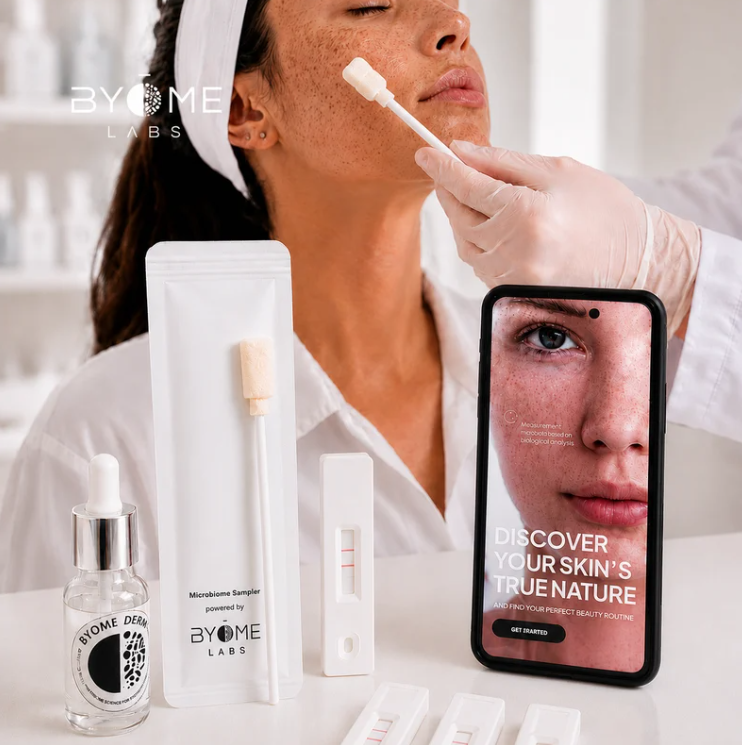
At BYOME LABS, we offer in vitro testing to assess the impact of products on the skin microbiome. We can recreate in the laboratory dysbiosis conditions, such as those associated with acne, to observe how your product performs in this type of environment. Our analyses and recommendations are tailored to support the development of skincare products that are both effective and respectful of the microbiome’s natural balance.
Sources :
1. Dessinioti C, Katsambas A. The Microbiome and Acne: Perspectives for Treatment. Dermatol Ther. 1 janv 2024;14(1):31‑44.
2. Podwojniak A, Tan IJ, Sauer J, Neubauer Z, Rothenberg H, Ghani H, et al. Acne and the cutaneous microbiome: A systematic review of mechanisms and implications for treatments. J Eur Acad Dermatol Venereol. avr 2025;39(4):793‑805.
3. Huang C, Zhuo F, Han B, Li W, Jiang B, Zhang K, et al. The updates and implications of cutaneous microbiota in acne. Cell Biosci. 21 juin 2023;13(1):113.
4. Niedźwiedzka A, Micallef MP, Biazzo M, Podrini C. The Role of the Skin Microbiome in Acne: Challenges and Future Therapeutic Opportunities. Int J Mol Sci. 24 oct 2024;25(21):11422.
5. O’Neill AM, Nakatsuji T, Hayachi A, Williams MR, Mills RH, Gonzalez DJ, et al. Identification of a human skin commensal bacterium that selectively kills Cutibacterium acnes. J Invest Dermatol. août 2020;140(8):1619-1628.e2.
6. Song YC, Hahn HJ, Kim JY, Ko JH, Lee YW, Choe YB, et al. Epidemiologic Study of Malassezia Yeasts in Acne Patients by Analysis of 26S rDNA PCR-RFLP. Ann Dermatol. août 2011;23(3):321‑8.