The microbiome refers to the collection of microorganisms (bacteria, viruses, fungi, etc.) and their genes that inhabit various parts of the human body (Cho & Blaser, 2012). In close interaction with the host organism, these microbial communities play a fundamental role in several biological functions, and their disruption can lead to diseases (Aggarwal et al., 2022).
 The term “microbiota” refers to the collection of microorganisms present in a given environment (such as the skin, intestine, or mouth), whereas the “microbiome” also includes their genes and the metabolites they produce (Aggarwal et al., 2022). In this sense, the microbiome represents a complete ecosystem that significantly influences human health. The human microbiome harbors a genetic diversity far greater than that of the human genome itself, regulating functions such as metabolism, protein production, the synthesis of certain vitamins, and the immune system (Cho & Blaser, 2012).
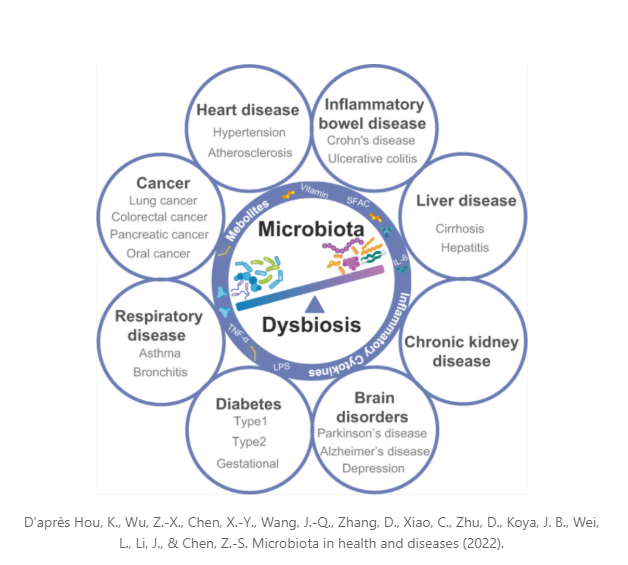
When this balance is disrupted, it can lead to physiological disorders, a condition known as dysbiosis. Although pathogens may be present, it is primarily changes in the diversity of microorganisms that often lead to disease. For instance, Cutibacterium acnes, a bacterium normally found on the skin, is implicated in acne when the diversity of its phylotypes decreases, favoring the proliferation of a single dominant type.
The Different Types of Microbiomes
Although the gut microbiota is the most extensively studied for its role in digestion, vitamin synthesis, and immune system regulation, other microbiomes are equally crucial for health.
• The skin microbiome: protects the skin, the body’s first line of defense against the external environment, by contributing to the integrity of the skin barrier and preventing pathogen invasion.
• The scalp microbiome: regulates secretions and prevents irritation and infections, thereby promoting hair health.
• The vaginal microbiome: contributes to protection against sexually transmitted and urinary tract infections, playing a critical role in female intimate health.
• The oral microbiome: the second most diverse microbiome after the gut, is essential for oral health and for preventing systemic diseases by limiting the spread of microbes.
These microbiomes interact in complex ways with the immune system, and maintaining their balance is vital for the prevention of various pathologies.
(Aggarwal et al., 2022; Cho & Blaser, 2012; Hou et al., 2022).
Factors Influencing the Microbiome
Internal factors such as genetics, as well as external factors such as diet, environment, and the application of products on the skin, directly influence the composition of the microbiomes (Aggarwal et al., 2022).
This is why it is crucial to design products that respect this balance.

Among the most commonly available moisturizers on the market, not all are equally suited to all types of microbiomes: some better preserve microbial diversity, while others may promote the growth of certain bacterial species at the expense of others. These findings highlight the importance of a tailored and personalized approach in the selection of cosmetic care products to respect and optimize the balance of the skin microbiome.
BYOME LABS’ Commitment
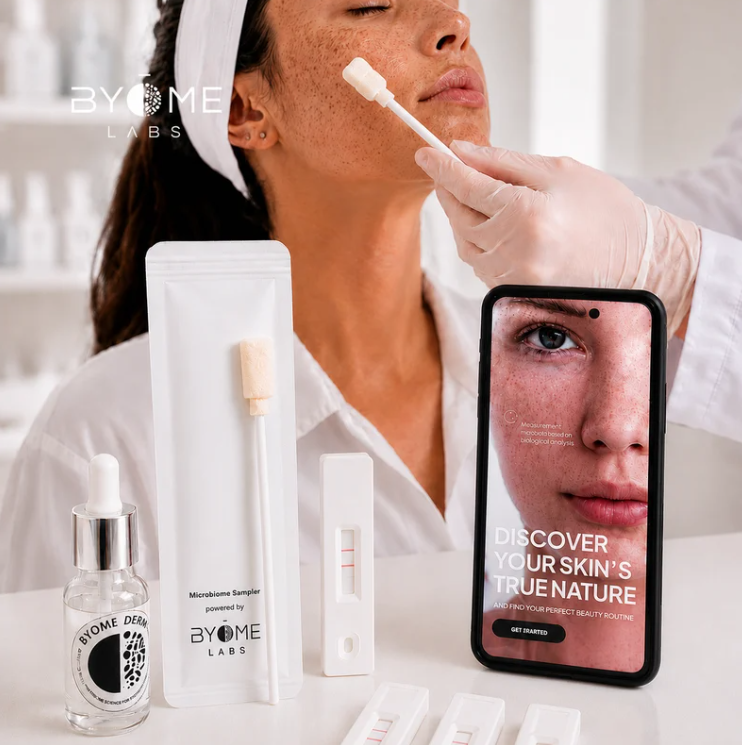
At BYOME LABS, we are committed to understanding and optimizing microbiomes to improve consumer health. We offer tailored services for the analysis and optimization of cosmetic, dermocosmetic, and pharmaceutical products with respect to the skin, oral, vaginal, and scalp microbiomes.
In addition, we offer a “Microbiome Respect” certification, which guarantees that cosmetic products preserve the balance of the skin microbiome. At a time when consumers are seeking safe and suitable products, this certification serves as a mark of trust, addressing a growing need among brands and manufacturers. In doing so, we contribute to the development of innovative formulations that support microbial balance while protecting beneficial microorganisms. On this World Health Day, we reaffirm our commitment to promoting a balanced microbiome and to supporting the prevention of microbial imbalances, a crucial issue for consumer health and well-being.
References :
Aggarwal, N., Kitano, S., Puah, G. R. Y., Kittelmann, S., Hwang, I. Y., & Chang, M. W. (2022). Microbiome and Human Health : Current Understanding, Engineering, and Enabling Technologies. Chemical Reviews, 123(1), 31‑72. https://doi.org/10.1021/acs.chemrev.2c00431
Cho, I., & Blaser, M. J. (2012). The Human Microbiome : At the interface of health and disease. Nature reviews. Genetics, 13(4), 260‑270. https://doi.org/10.1038/nrg3182
Hou, K., Wu, Z.-X., Chen, X.-Y., Wang, J.-Q., Zhang, D., Xiao, C., Zhu, D., Koya, J. B., Wei, L., Li, J., & Chen, Z.-S. (2022). Microbiota in health and diseases. Signal Transduction and Targeted Therapy, 7, 135. https://doi.org/10.1038/s41392-022-00974-4
BYOME LABS, France, Microbiome Respect Labeling Standards and Practices, Protocols and Internal Data