
Advanced expertise to ensure the safety and efficacy of your care
Cosmetic analysis allows you to verify the efficacy, stability, and safety of your formulations. At Byome Labs, we use advanced scientific methods to evaluate your products under real-world conditions and provide accurate, actionable data.

A rigorous and personalised scientific approach
Our analyses are based on validated protocols to ensure reliable and usable results.
Marie, distributor of specialty ingredients
Sandra, DEMAIN BEAUTY
Coralie Sabatier, BOPLUME
Sébastien, cosmetics group
Contact us for a customised cosmetic analysis
Everything you need to know about cosmetic analysis


Would you like to make an appointment or get more information?
You can reach us by filling in the contact form opposite or by e-mail at : info@byomelabs.com
BYOME LABS
Cité de l’Innovation
7 rue Auguste Rodin
28630 LE COUDRAY
This site is protected by reCAPTCHA and the Google Privacy Policy and Terms of Service apply.
In a highly competitive cosmetics market, it is essential for brands to prove the efficacy and safety of their products. Cosmetic analysis plays a key role in providing tangible scientific evidence to validate marketing claims and ensure regulatory compliance.
Through a rigorous approach, in-depth analyses and proven laboratory methods, these evaluations help optimise the communication of cosmetic products while strengthening consumer and distributor confidence. Translated with DeepL.com (free version)
Consumer expectations are changing: they want cosmetics that are not only effective, but also scientifically proven. A simple marketing promise is no longer enough: concrete data is needed to justify the claimed benefits.
Cosmetic analyses make it possible to:
Incorporating scientific evidence into communication also reassures users about the list of ingredients used, their concentration and their precise dosage.
osmetic analysis is based on rigorous scientific methods to guarantee the quality, safety and effectiveness of products.
Efficacy tests – Validate your marketing claims
Efficacy tests objectively measure the effects of the product on the skin or hair. These include:
Concrete example: a moisturiser can only claim to ‘hydrate the skin for 24 hours’ if this has been proven by a corneometric test carried out in a laboratory.
Skin tolerance tests – Ensuring consumer safety
These tests assess the absence of adverse effects such as redness, irritation or allergic reactions.
Dermatological patch tests: controlled application of the product to the skin to detect any sensitisation.
Dermatologically controlled use tests: prolonged application to volunteers to assess tolerance.
A key argument: ‘Dermatologically tested’ is a reassuring label that requires rigorous analysis of the effects of ingredients on different skin types.
Stability and compatibility tests – Ensuring the quality of formulas
A product must remain stable over time and under various conditions of use. These tests evaluate:
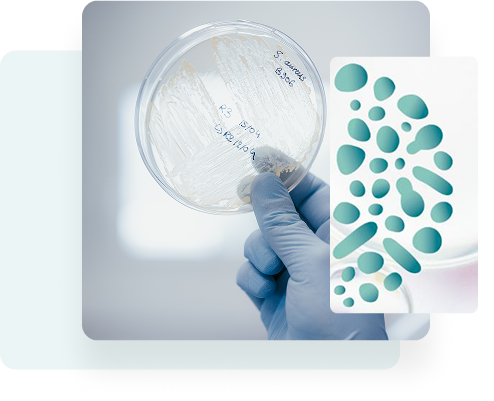
Microbiological analyses guarantee that the product does not contain pathogenic bacteria or fungi, thus ensuring its safety for users.
One of the main benefits of cosmetic analysis is that it provides measurable data that reinforces product credibility.
Marketing example:
Instead of claiming ‘Reduces wrinkles’, a brand can say ‘Reduces wrinkle depth by 30% in 4 weeks, proven by a clinical study’.
Scientific evidence is not just a regulatory argument: it becomes a powerful marketing lever. Every test, every active ingredient dosage, every ingredient listed in the formula adds value to cosmetic products, reinforcing both their perceived effectiveness and their commercial credibility.

Notre site utilise des cookies pour améliorer votre expérience de navigation. En continuant à utiliser notre site, vous acceptez notre utilisation de cookies conformément à notre politique de confidentialité.

